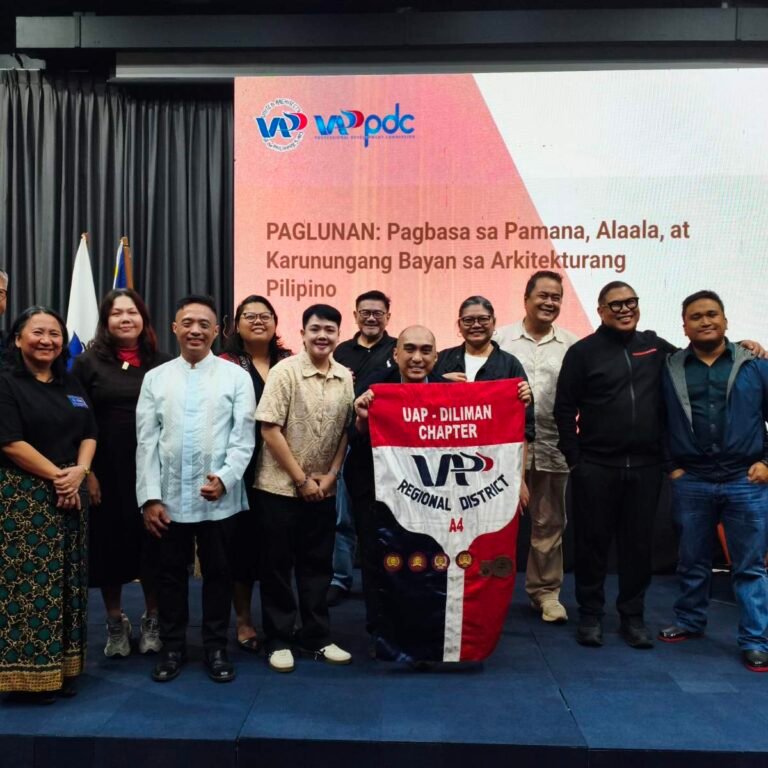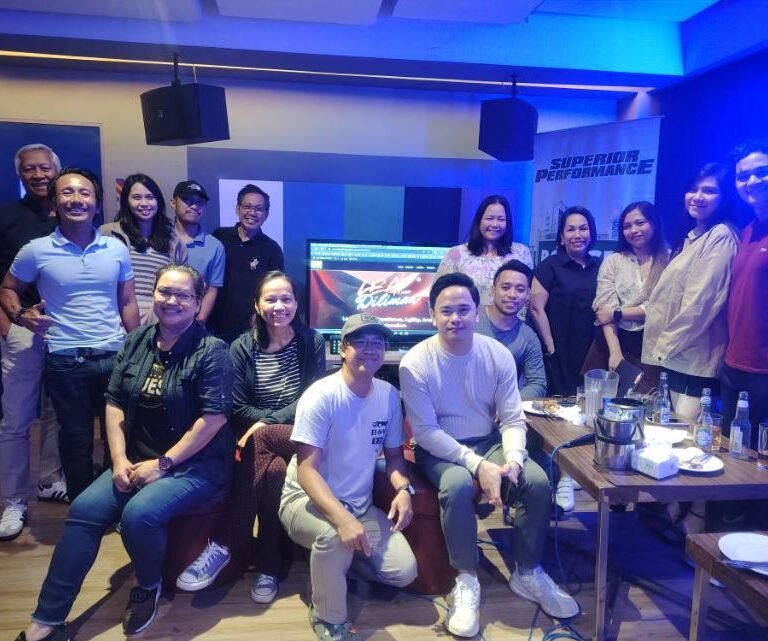
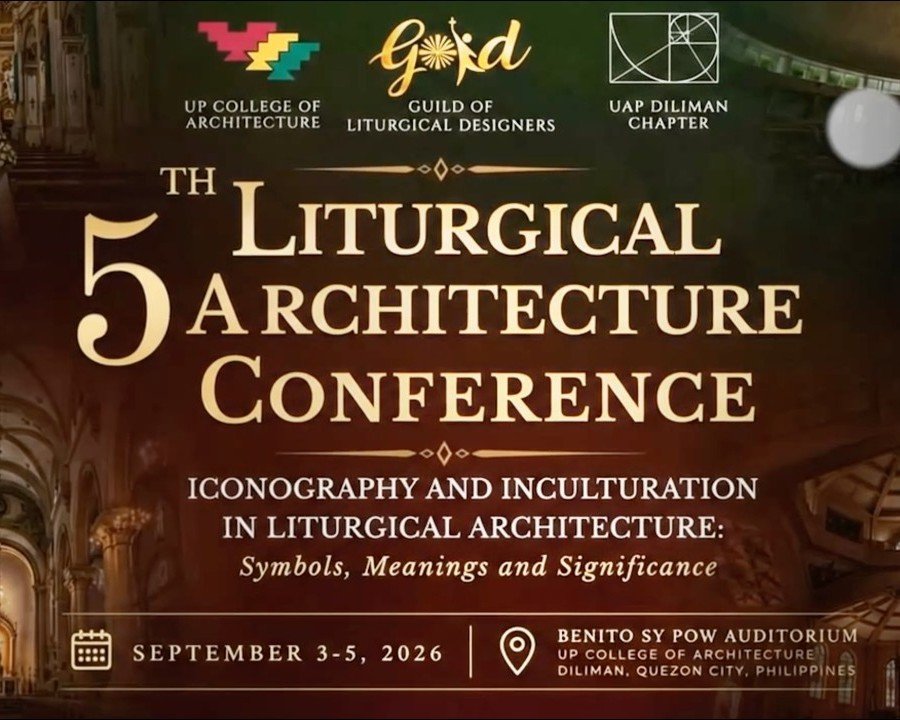
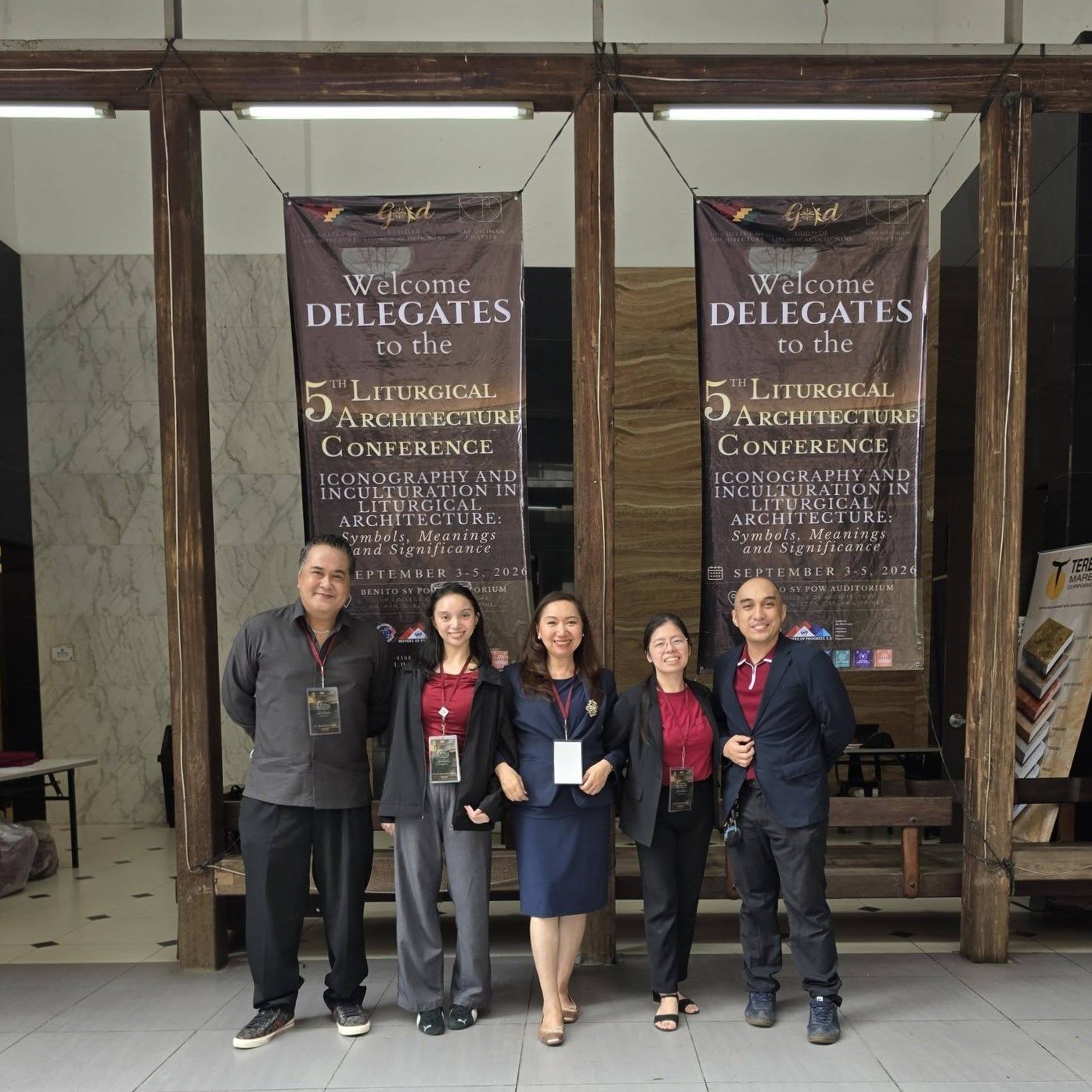
The UP College of Architecture (UPCA), the Guild of Liturgical Designers (GOLD), and the United Architects of the Philippines Diliman Chapter (UAP Diliman) gathered architects, designers, clergy, scholars, artists, and heritage advocates for the 5th Liturgical Architecture Conference, held from September 3 to 5, 2026, at the Benito Sy Pow Auditorium, UP College of Architecture, Diliman, Quezon City.
Centered on the theme “Iconography and Inculturation in Liturgical Architecture: Symbols, Meanings and Significance,” the three-day conference invited participants to reflect on how sacred spaces speak through form, image, culture, memory, and meaning. More than a technical discussion on church design, the event opened a deeper conversation on how architecture becomes a vessel of faith, identity, tradition, and community.
The conference also served as a valuable Continuing Professional Development opportunity for architect attendees, with face-to-face participants earning 13 CPD points for three days and online participants earning 4 CPD points for Days 1 and 2.
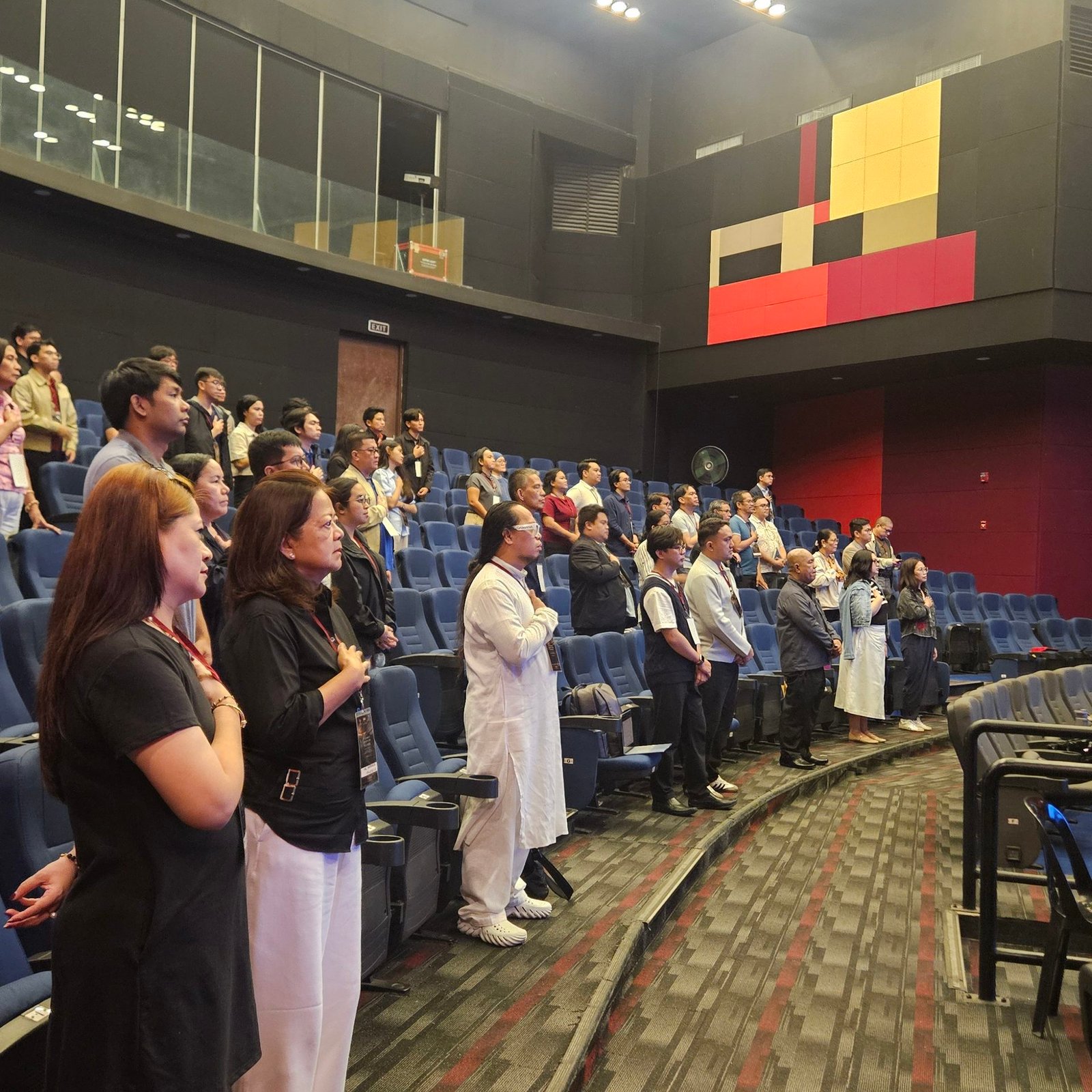
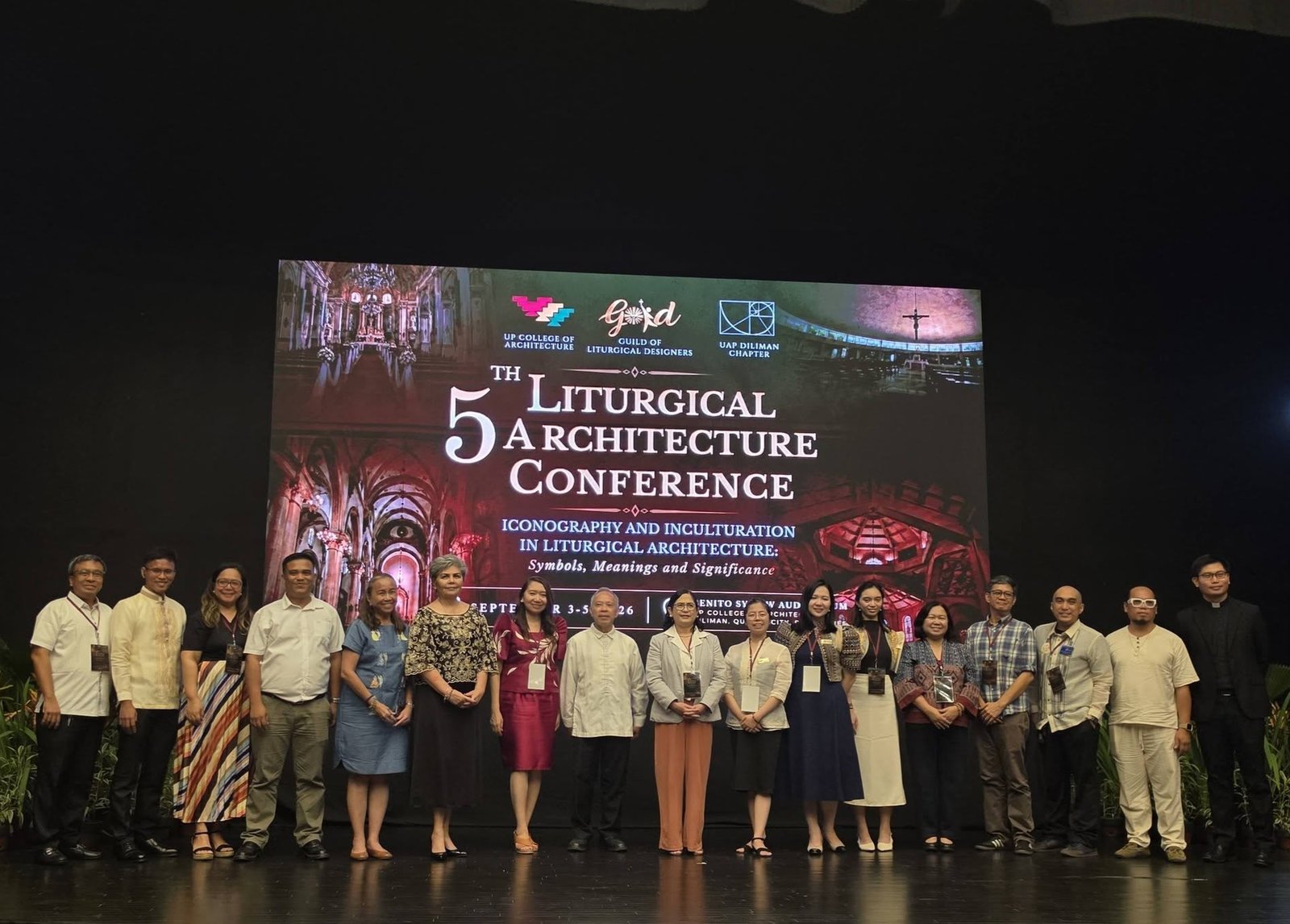
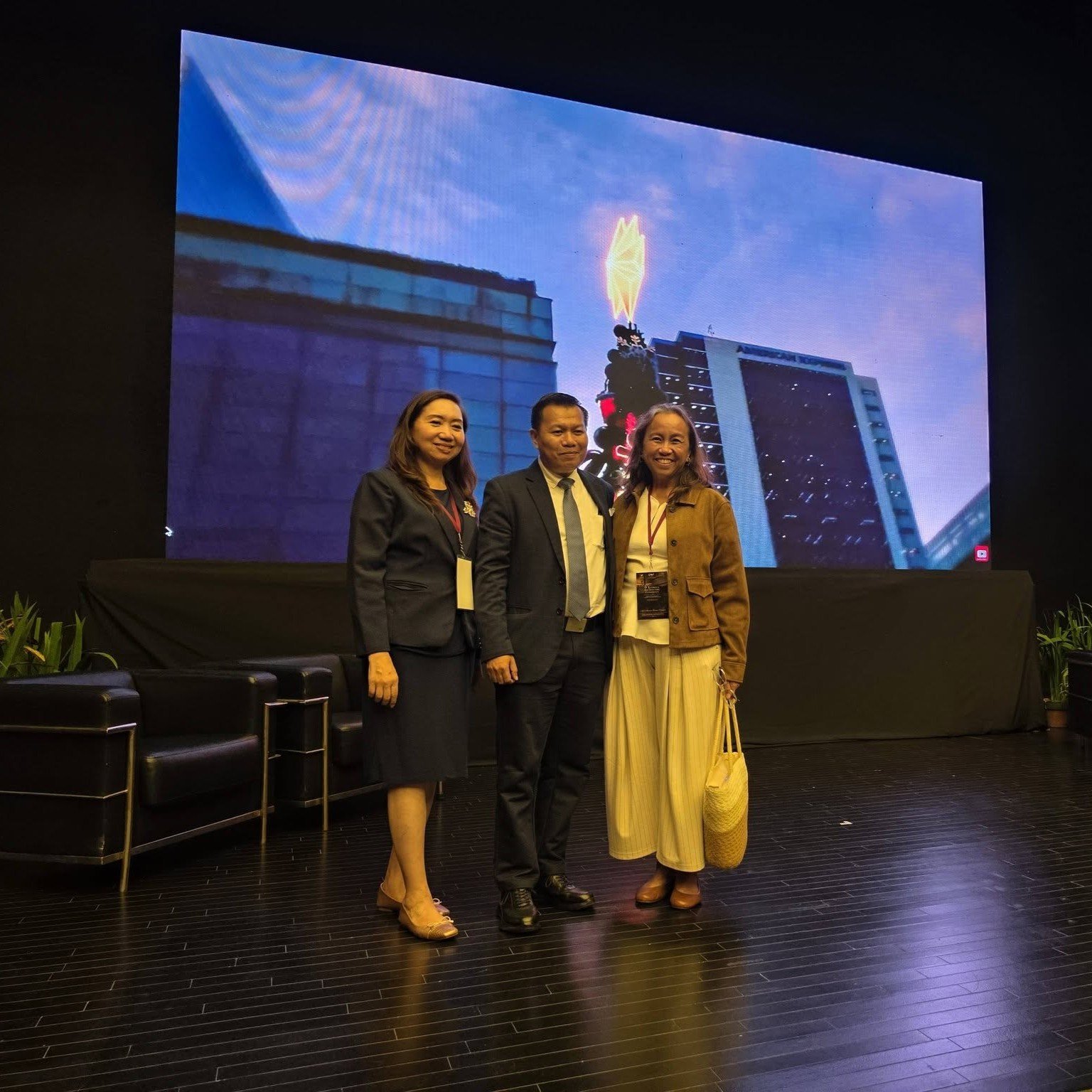
The conference opened on September 3 with an Opening Eucharistic Celebration presided over by Rev. Fr. Christian Joseph A. Vales, CJM, concelebrated by Rev. Fr. Nelson Zerda, with Rev. Fr. Lino Abuzo Macatol II as homilist. This was followed by welcome remarks from Dr. Carmen Bettina Bulaong, Dean of the UP College of Architecture, and opening remarks from Dr. Stephanie N. Gilles, Convenor of the conference and Founding Chairperson of the Guild of Liturgical Designers. Dr. Gilles noted the significance of holding the conference in a non-sectarian university for the first time, emphasizing that the sense of the sacred lies at the heart of every person.
Participants were also enriched by inspirational messages from Most Rev. Archbishop David William Antonio, Head of the CBCP Episcopal Commission on Liturgy; Dr. Jonathan Manalad, UAP National President; and Ar. Markel Cesar Luna, Head of the HTC Laboratory of the UP College of Architecture.
The keynote address was delivered by Most Rev. Bishop Elias C. Ayuban, Jr., who offered insights into the role of iconography and inculturation in shaping liturgical architecture. He emphasized how form, light, and space are interconnected with the divine, setting a reflective tone for the rest of the conference.
The first day continued with lectures on sacred art, religious imagery, historic churches, and the theological foundations of sacred space. Hon. Regalado Trota Jose, Jr., Chair of the National Historical Commission of the Philippines, discussed Liturgical Arts and Architecture in Historic Churches of the Philippines, reminding the audience of the importance of preserving the country’s religious and cultural heritage.
Mr. Billy Malacura presented Poon at Prusisyon: Staging the Sacred in Philippine Popular Religiosity, showing how Christian faith, particularly Roman Catholicism, has entered the Filipino household and devotional life. He also reflected on the limits of localizing religious images, emphasizing that certain material things, such as the Eucharist, are inherently sacred and cannot be treated as mere symbols.
The final speaker for Day 1, Rev. Fr. Alfred Robert V. Cruz, discussed The Theology Behind Iconography and Inculturation. Drawing from his background in architecture, theology, philosophy, and the priesthood, he explained how sacred images and architectural forms express theological meaning while remaining rooted in the cultures where the Church is present.
Despite the heavy rains, the second day was kept on schedule. The program opened with remarks from Ar. Lucito Rafael Reyes, UAP Diliman Chapter President and Co-Organizer of the conference.
The second day focused on inculturation and sacred spaces in Philippine and Asian contexts. Ar. Aurora Berba Panopio, Dean of the National University College of Architecture, discussed Inculturation of Sacred Spaces in the Philippines, using Quiapo Church and modern religious practices to show how sacred spaces may be experienced not only inside churches, but also in public roads, malls, schools, barangay courts, and neighborhood street grottos.
Dr. Joseph Richard III Renta, Administrator and Curator of the Museum and Archives at San Beda Alabang, expanded the discussion into the Asian context by tracing Austronesian heritage and Filipino values such as maka-Diyos, maka-kalikasan, and maka-tao. His presentation emphasized that sacred spaces are transparent and multi-sensory, and that the experience of sanctity may be encountered across daily life.
The discussion later turned to iconography and sculpture with Dr. Romeo Galang, Assistant Professor at Far Eastern University, who presented Traces of Chinese Influences on Philippine Ecclesiastical Bas-Relief Sculptures. He discussed the influence of Flemish artists, Sangleys, and Filipinos in shaping religious sculpture and ecclesiastical imagery during the Spanish-colonial period.
Rev. Fr. Nelson Zerda and Ms. Pia Soriano-Gatdula further explored symbols and meanings in ecclesiastical art, especially in retablos and paintings. Rev. Fr. Zerda focused on iconography in sacred-space design and the intentional use of visual symbols, images, and spatial hierarchy, while Ms. Soriano-Gatdula shared the Principles of Sacred Art through her experience at the Prosopon School of Iconography, where artists learn not only to paint icons, but to “write” them with purpose and meaning.
Through these sessions, participants were reminded that liturgical art and architecture are never merely decorative or functional. Every image, material, proportion, artwork, and spatial gesture carries meaning. Sacred architecture becomes a meeting point between theology, culture, memory, and the lived experience of worship.
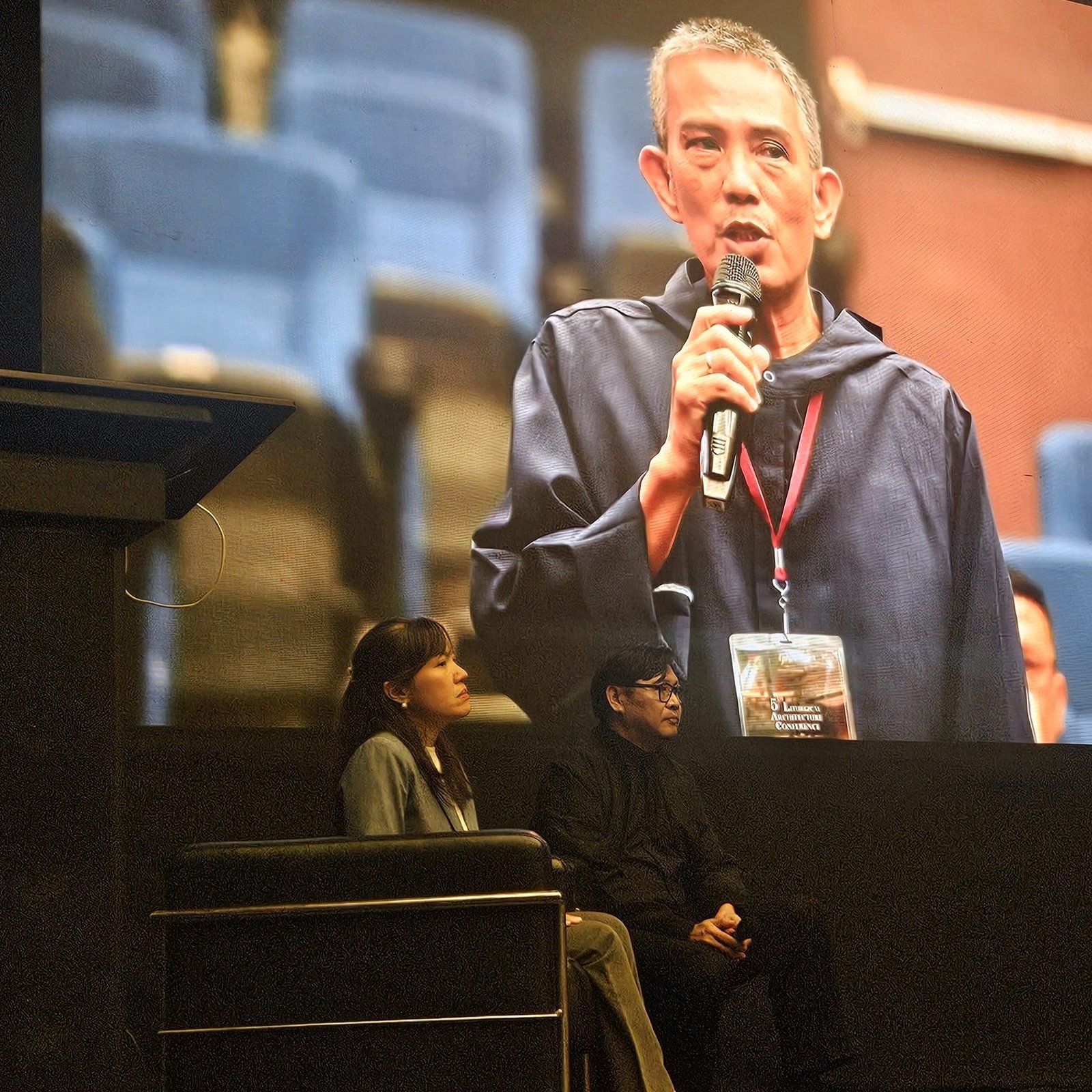
The third day began with the Closing Mass celebrated by Rev. Fr. Lino Abuzo Macatol II. In his homily, he reflected on the humility of the liturgical designer, emphasizing that while people may not always know who designed a sacred space, God knows and does not forget the work done in His service.
This was followed by a roundtable discussion on “The Genesis of UP Chapel: From Inception to Completion,” which focused on the UP Chapel of the Holy Sacrifice, one of the country’s most significant sacred architectural landmarks. The session featured Dr. Caryn Santillan and Dean Abdulmari “Toym” D. Imao, Jr. of the UP College of Fine Arts, who offered perspectives on the chapel’s artistic, architectural, and structural significance.
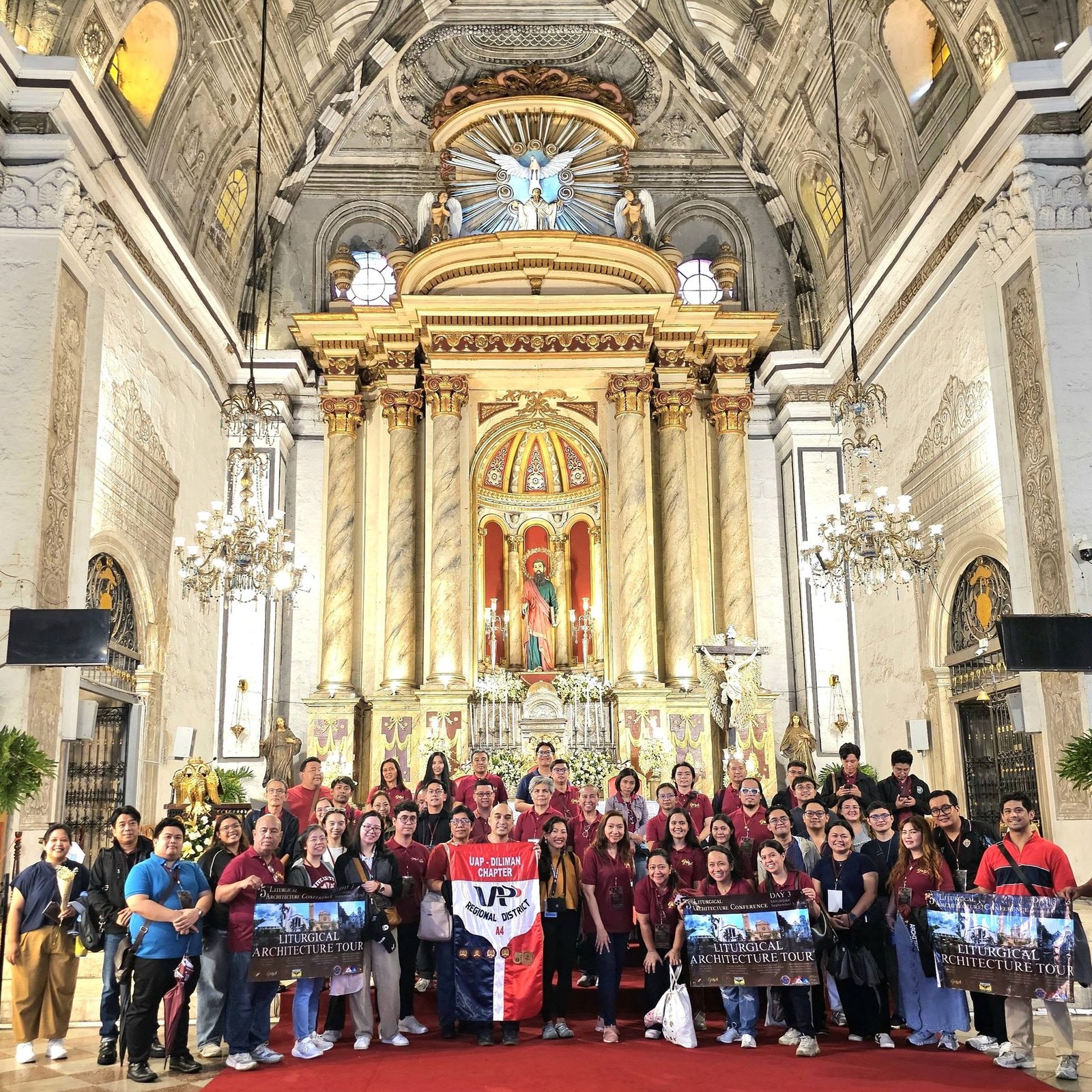
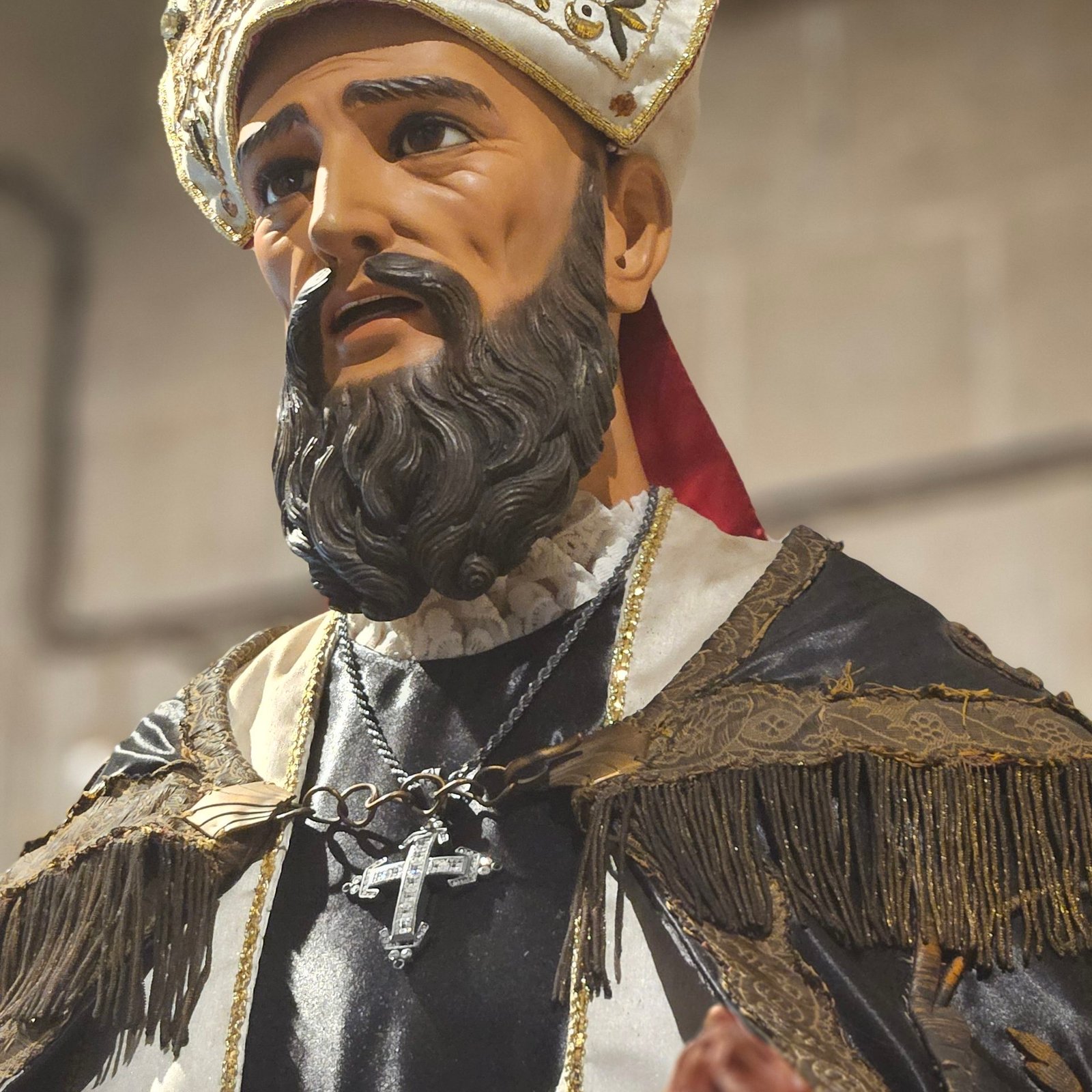
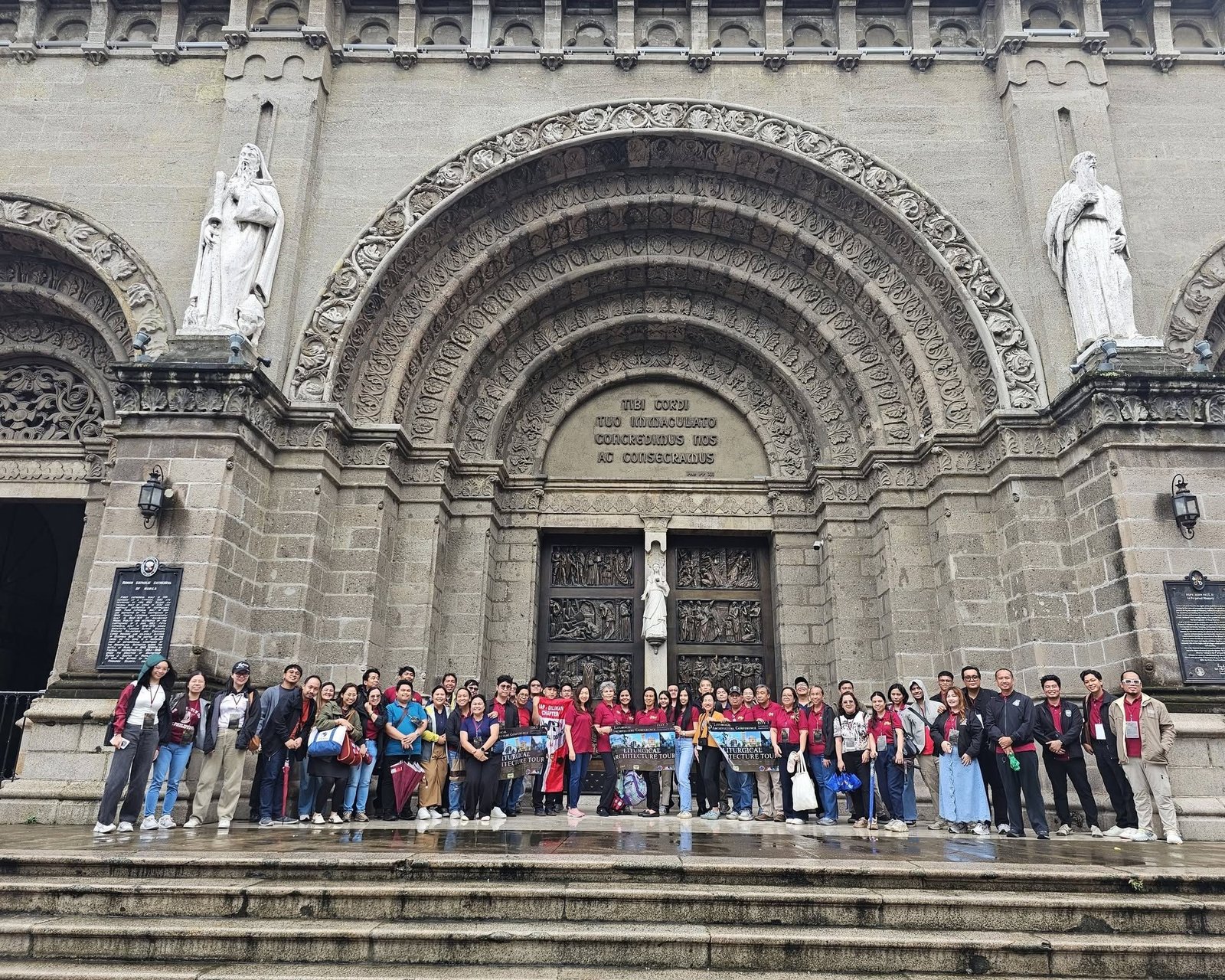
The conference concluded with a Liturgical Architecture Tour, allowing participants to experience sacred architecture beyond the lecture hall. Led by Ms. Bea Dolores, DOT-certified Tour Guide and President of Renacimiento Manila, the tour included visits to Sto. Domingo Church, National Shrine of Our Lady of the Rosary La Naval; Manila Cathedral and Minor Basilica of the Immaculate Conception; and San Agustin Church, including private access to San Agustin Church and its museum rich in religious artifacts.
Across three days of lectures, discussions, worship, and architectural tours, the 5th Liturgical Architecture Conference created a meaningful space for reflection on how sacred architecture continues to shape faith, culture, and collective memory. With its successful CPD accreditation and participation from both face-to-face and online attendees, the conference affirmed the continuing importance of professional development grounded not only in technical knowledge, but also in socio-cultural experience, spirituality, and heritage.
GOLD’s collaboration with UAP Diliman was a success. The conference served as another meaningful engagement in architectural education, liturgical design, cultural dialogue, and professional development. It affirmed the architect’s role not only as a designer of spaces, but also as a steward of meaning, heritage, and the sacred dimensions of the built environment.
The 6th Liturgical Architecture Conference will be held two years from now and we have high hopes that The Guild of Liturgical Designers (GOLD) continues to grow their community of advocates of responsible and meaningful liturgical designs.